
Reading
My mother and her newspapers.

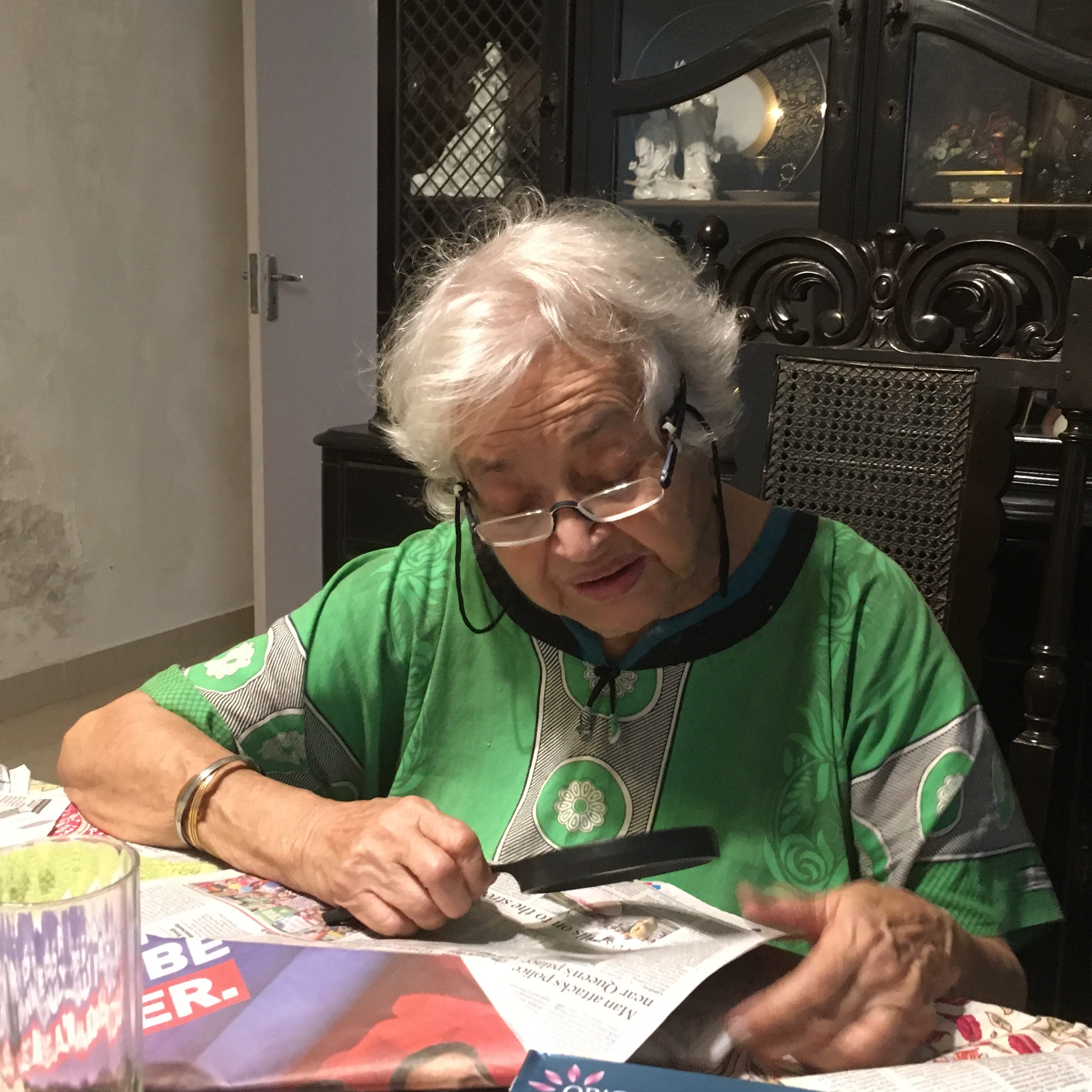
Every morning, my mother - Soni Prashad (1929-2020) - would wake up, drink a cup of tea, bring out her magnifying glass, and read through a set of newspapers. She needed the magnifying glass toward the end of her life because otherwise she would not have been able to read the print. Going through the paper, she would discover stories that interested her. Then, she would ring me - regardless of my location and time zone - and, methodically, ask me about this or that story. ‘What is going on in Libya’, she would ask, or, ‘Why is there so little concern for climate change?’. She expected me to give her a brief answer before she moved on to the next topic. It was a ritual that I thoroughly enjoyed because we would dance around topics, a dialectical swirl through the motions of the world.
This morning, in Santiago, I sat at my dining table with a cup of tea looking out at the vista of buildings before me. I had no physical newspaper on the table, but used my computer to take me to news stories around the world. I missed the phone call,
Hello son. How are you?
Listen, what is going on in Sudan?
The story here is of a massacre.
And then Gaza.
When will it end?
What is wrong with the Israelis?
Tell me, son, how are you?
The staccato nature of the conversation: the news, her concern for me, the need for explanation, and then the dismissal of the explanation. How can this happen? Why do people do this? What is wrong with the United States government? What appealed to me about her attitude was that no explanation was sufficient for the murderous ways of imperialism. Nothing explained the use of depleted uranium in Iraq, or the punctual bombardment of Gaza. My travels scared her: why go here or there? But they also excited her. She liked to watch my explanations on various shows, but then would return to the fundamental question, an existential one: why? A one word question with no need for an answer.
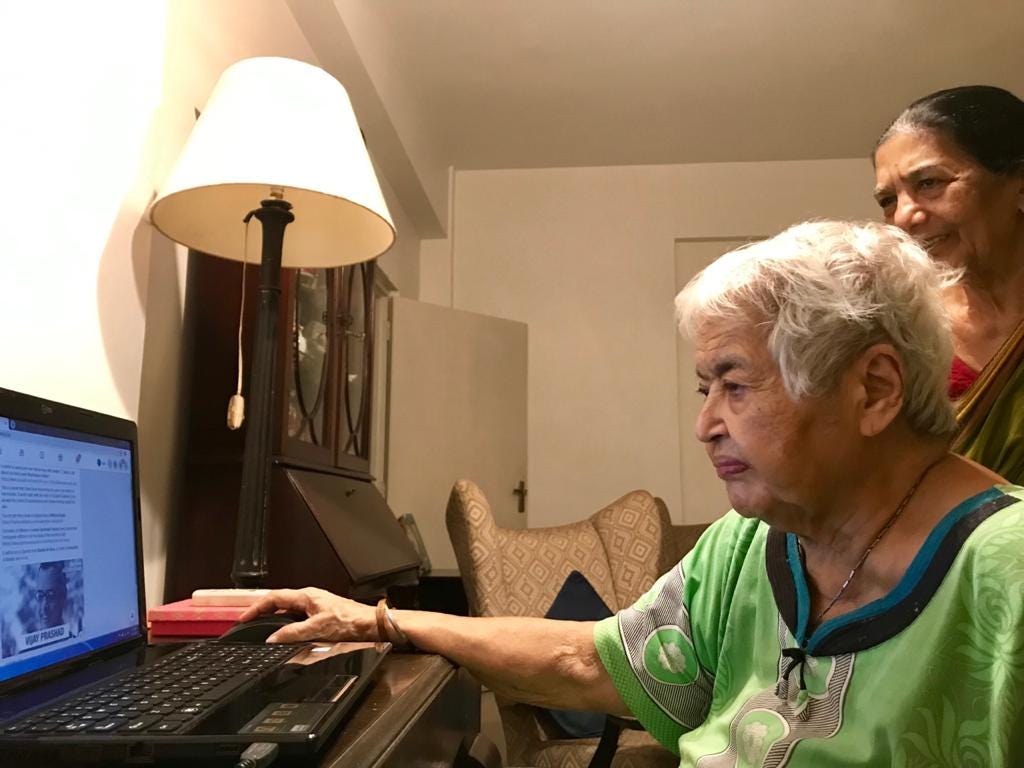
My mother and Rosy get ready to watch one of my news interviews.
Why?
She laid out her newspaper with care.
Unfurling each page with despair.
Each page is given a quick scan,
Then she pauses at Afghanistan.
She stirs her tea.
Another bomb, she will announce.
A city’s name hard to pronounce.
Number of the dead in a neat row,
Hard to say who is enemy, who foe.
She stirs her tea.
A president shakes his head.
A people shiver with dread.
Laburnum has decided to bloom.
A people are sent to their doom.
She stirs her tea.
The silence smells like smoke.
The world is set to choke.
I stir my tea.
A silly poem in memory of my mother.
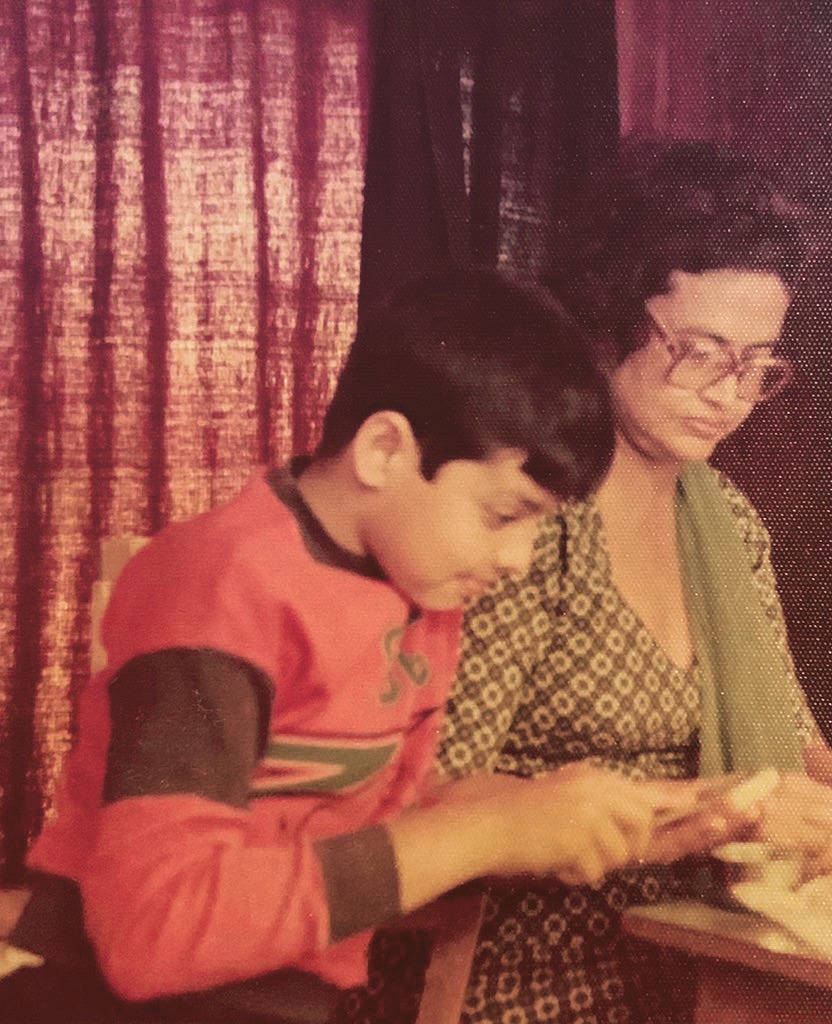
My mother, reading a newspaper, and I, buttering a toast, in the late 1970s.
What a sweet, tender glimpse of your mother, and your relationship. I’m reminded of when I was a child in the late sixties and early seventies, hearing my mother’s commentaries on the evening news programs which she had on the kitchen tv every night while she was making dinner. I was too young to understand most of what was going on, and she never explained it to us, but I do remember the Vietnam war scenes night after night, and her always being riveted, I don’t even remember her stance on issues, except she was at times critical of the government, and other times of the people. But during the Vietnam war I remember a couple times she was brought to angry tears. I remember saying, “Mom, it’s only The News! How can you cry over The News? You don’t even know these people, they live an ocean away from you!” I found the depth of her emotional involvement absurd, and silly. Until I came into adulthood, and I cried, too, and as it ended up, much more than she ever did. Because I witnessed the unfettered genocide of the Palestinian people.
Yes, Mothers…it’s with decidedly mixed feelings that I reflect that mothers, both yours and mine, who died at the same age and roughly the same year, did not have to read about a Mother in Gaza who lost nine of her ten children in an Israeli terrorist attack. This was a sweet note, thanks and best wishes.